Source transparent car seat cover for SUVs, Sedans, and Trucks
Explore 30 listings for transparent car seat cover options including woven, knitted, and disposable varieties. Buyers can compare features like waterproofing, customization, and packaging to find suitable solutions for various vehicle types.
Key considerations
Products List




Comprehensive Sourcing Guide
Strategic Sourcing Guide for Transparent Car Seat Covers
Navigating the B2B market for transparent car seat covers requires a disciplined approach to distinguishing between disposable protective solutions and permanent interior accessories. The supply landscape for this core keyword is fragmented, often blending products designed for temporary hygiene protection with those intended for long-term vehicle interior maintenance. Buyers must carefully analyze product attributes, material composition, and technical specifications to ensure alignment with specific procurement needs. This guide outlines the critical factors for sourcing transparent car seat covers, focusing on verified product facts, material standards, and quality assurance protocols derived from current market data.
Technical Specifications and Material Composition
The first step in sourcing transparent car seat covers involves a rigorous examination of material composition and technical construction. The market offers a diverse range of options, from disposable plastic variants to woven fabric solutions. A critical distinction exists between products labeled as "Disposable Plastic Car Seat Covers" and those described as "Health Air Cushion" or "Leather Car Seat" alternatives. For buyers specifically seeking transparent covers, the material attribute is paramount. The supplied data indicates the existence of products with a "Disposable" keyword and a "Water Proof" feature, suggesting a plastic or polymer-based construction suitable for temporary protection.
In contrast, other entries in the market list "Fabric" and "100% Polyester" as primary materials, with "Woven" or "Knitted" technics. While these are excellent for comfort and aesthetics, they do not inherently meet the "transparent" requirement unless a specific clear plastic overlay or coating is applied. Buyers must verify if the "Transparent" attribute refers to the primary material or a secondary feature. The presence of a "PVC" backing material in some listings suggests that transparency may be achieved through PVC layers or laminates. When evaluating technical specifications, the "Universal" size classification is common, indicating a one-size-fits-most approach that requires careful measurement against vehicle seat dimensions.
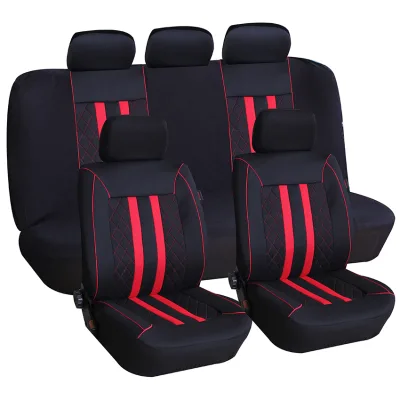
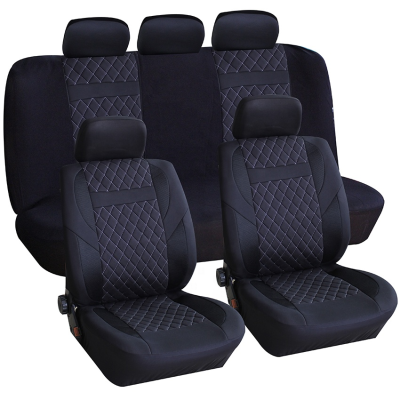
The "Four Seasons Cushion" classification and "Nine Piece Suit" or "Five Piece Suit" configurations highlight that many transparent covers are part of a larger set. A complete set may include seat covers, headrest covers, and steering wheel covers. The "No. of Seat Covers: 2PCS" specification points to partial sets, which may be insufficient for full vehicle protection. Procurement teams must cross-reference the "Product Name" with the "Suit for Vehicle Type" to ensure the transparent covers are compatible with the specific vehicle model. The "Universal Car Acceptable" tag implies broad compatibility, but the physical dimensions of the transparent material must be verified against the target vehicle's seat geometry.
Compliance, Certification, and Safety Standards
Ensuring compliance with safety and environmental standards is a non-negotiable aspect of sourcing car seat covers, particularly those involving plastic or PVC materials. The supplied data references an "Export Standard" and a "Universal" standard, but these terms are generic and do not specify regulatory compliance. Buyers must verify that the transparent covers meet the safety regulations of the destination market, such as flammability standards for automotive interiors in the United States (FMVSS 302) or European Union regulations (ECE R100).
For disposable plastic covers, the primary concern is often the chemical composition of the plastic. If the product contains PVC, as noted in some material attributes, buyers should request a Material Safety Data Sheet (MSDS) to confirm the absence of hazardous plasticizers like phthalates. The "Water Proof" feature suggests a coating or treatment that may involve chemical additives. These additives must be non-toxic and safe for prolonged skin contact, especially if the covers are used in vehicles with children or pets.
Certification checks should extend to the manufacturing process. While the data mentions "OEM Logo" and "Customized Logo" acceptance, it does not explicitly list third-party certifications like ISO 9001 for quality management or ISO 14001 for environmental management. Buyers should not assume these certifications exist without verification. The "Unverisal" standard mentioned in the data is likely a typographical variation of "Universal," but it does not constitute a recognized regulatory standard. Procurement teams must explicitly request documentation proving that the transparent covers comply with local automotive interior safety laws and that the materials are free from volatile organic compounds (VOCs) that could degrade air quality inside the vehicle.
Cost Drivers and Pricing Dynamics
Understanding the cost drivers for transparent car seat covers is essential for budgeting and negotiating effective contracts. The observed price range in the market spans from $0.07 to $32.90 USD, a significant variance that reflects differences in material quality, set completeness, and order volume. The lower end of the spectrum likely corresponds to disposable plastic covers sold in bulk, where the unit cost is minimized through high-volume production and simple packaging. The higher end of the range may reflect premium materials, such as high-clarity PVC with anti-fog coatings, or complete "Nine Piece Suit" sets that include multiple components.
Minimum Order Quantity (MOQ) is a primary driver of unit cost. The data indicates an MOQ range of 50 to 20,000 units, with a specific high-confidence fact noting an MOQ of 2,000 pieces for certain items. Buyers ordering near the lower limit of the MOQ range will typically face higher per-unit costs due to the fixed costs of setup and production runs. Conversely, orders approaching the 20,000-unit threshold may benefit from economies of scale, significantly reducing the price per unit. The "30% Deposit" payment term is a standard financial requirement that affects cash flow planning but does not directly alter the product cost.
Packaging also influences cost. The data lists "OPP Pack with Color Card," "PE Bag," and "Cartons" as packaging options. Bulk packaging in rolls, such as "250PCS in Roll," reduces packaging material costs and shipping volume, which can lower the overall price. However, retail-ready packaging with color cards adds value for end consumers but increases the unit cost. Buyers must balance the need for attractive packaging against the budget constraints of the project. The "Sample: Avaliable" attribute suggests that buyers can test samples before committing to large orders, which is a prudent strategy to validate cost-per-quality ratios before finalizing the procurement contract.
Typical Applications and Use Cases
Transparent car seat covers serve distinct purposes depending on the application context. The "Disposable" keyword and "Protect Steering Wheel" usage indicate that a primary application is for temporary protection during vehicle maintenance, detailing, or delivery. In these scenarios, the covers are designed to be removed and discarded after a single use, protecting the original upholstery from dirt, oil, and debris. The "Water Proof" feature is particularly valuable in these applications, ensuring that liquids do not seep through to the seat fabric.
Another application involves long-term protection for new vehicles or high-end interiors. While the "Disposable" label suggests short-term use, the "Health Air Cushion" and "Leather Car Seat" attributes imply that some transparent covers are designed for extended wear. In this context, the transparency allows the original seat design to remain visible while providing a protective barrier against wear and tear. The "Four Seasons" classification suggests that these covers are engineered to perform in varying temperatures, maintaining flexibility in winter and breathability in summer.
The "Universal" size and "Suit for Vehicle Type" attributes indicate that these covers are intended for a broad market, including passenger cars, SUVs, and light trucks. However, the "Nine Piece Suit" and "Five Piece Suit" configurations suggest that some products are tailored for specific vehicle layouts. Buyers must ensure that the transparent covers selected match the specific seating configuration of the target fleet or vehicle inventory. The "Car Cushion Type" distinction between "Full Set" and "Seat Cushion" further clarifies the scope of protection, with full sets offering comprehensive coverage for the entire interior.
Supplier Evaluation and Verification
Evaluating suppliers for transparent car seat covers requires a focus on reliability, capacity, and transparency. The data indicates that suppliers are located in "Zhejiang" and "China," with ports in "Shanghai" and "Ningbo." These regions are known for their manufacturing capabilities, but buyers must verify the specific factory's capacity to produce transparent covers consistently. The "OEM Logo" and "Service: OEM Acceptable" attributes confirm that suppliers are willing to customize products, but the extent of customization capabilities should be clarified.
Buyers should request a detailed product catalog that distinguishes between disposable and permanent transparent covers. The presence of multiple product models, such as "103047," "ASC2007 RD/BK," and "A06507," suggests a diverse inventory. However, the lack of specific supplier names in the data means that buyers must conduct their own due diligence to identify reputable manufacturers. Verification of the "Sample: Avaliable" attribute is crucial; a supplier that readily provides samples demonstrates confidence in their product quality.
The "Payment Term: 30% Deposit" is a standard practice, but buyers should also inquire about the balance payment terms and the timeline for shipment. The "Lead Time" is not explicitly provided in the data, so buyers must ask for specific production and delivery schedules. Suppliers with a history of meeting delivery deadlines and maintaining consistent quality are preferred. Additionally, buyers should check if the supplier has experience with international shipping and customs clearance, given the "Export Standard" mentioned in the data.
Quality Control and Long-Term Procurement
Implementing a robust quality control (QC) protocol is essential for ensuring that transparent car seat covers meet performance expectations. The "Water Proof" feature and "Universal" size claims must be validated through physical testing. Buyers should establish acceptance criteria for transparency, ensuring that the material does not yellow or cloud over time. For disposable covers, the tensile strength and tear resistance are critical to prevent premature failure during use.
Long-term procurement considerations include the scalability of the supply chain. As demand grows, the supplier must be able to increase production without compromising quality. The "MOQ: 2000PC" fact suggests that suppliers have a minimum production threshold, which buyers must plan for in their inventory management. For large-scale operations, negotiating a tiered pricing structure based on volume can optimize costs.
Sustainability is also becoming a key factor in long-term procurement. While the "Disposable" nature of some covers presents environmental challenges, buyers can explore suppliers who offer biodegradable or recyclable transparent materials. The "Export Standard" implies that the products are designed for international markets, which often have stricter environmental regulations. Buyers should verify if the supplier has a sustainability policy and if the materials used are compliant with relevant environmental standards.
Comparison of Product Attributes
To facilitate decision-making, the following table summarizes key attributes observed in the market for transparent car seat covers. This comparison helps buyers distinguish between disposable and permanent solutions, as well as identify the most suitable options for their specific needs.
| Attribute | Disposable Plastic Variant | Permanent Fabric/Leather Variant |
|---|---|---|
| Primary Material | Plastic (PVC/PE) | Fabric, 100% Polyester, Leather |
| Technics | Handmade, Woven | Knitted, Woven |
| Usage | Protect Steering Wheel, Temporary | Health Air Cushion, Four Seasons |
| Packaging | 250PCS in Roll, PE Bag | Cartons, OPP Pack with Color Card |
| MOQ | 50 - 20000 | 2000 (Typical) |
| Key Feature | Water Proof, Disposable | Universal Size, Customizable Logo |
| Suit Type | 2PCS, Universal | Nine Piece Suit, Five Piece Suit |
| Origin | Zhejiang, China | Zhejiang, China |
This table highlights the fundamental differences between the two main categories of car seat covers. Buyers seeking transparency for temporary protection should focus on the "Disposable Plastic Variant" column, while those looking for long-term interior enhancement should consider the "Permanent Fabric/Leather Variant." The "Universal" size and "Customizable Logo" attributes are common to both, offering flexibility in sourcing.
Conclusion
Sourcing transparent car seat covers requires a meticulous approach to evaluating material properties, compliance standards, and supplier capabilities. The market offers a wide range of options, from disposable plastic covers for temporary protection to permanent fabric solutions for long-term use. Buyers must carefully verify product specifications, ensuring that the "Transparent" attribute aligns with their specific requirements. By adhering to the guidelines outlined in this guide, procurement teams can make informed decisions that balance cost, quality, and performance, ultimately securing a reliable supply chain for their automotive interior needs.
FAQs
What material is used for transparent car seat covers?
Some products use disposable plastic with a waterproof feature, while others utilize fabric like 100% polyester or PVC backing. Buyers must verify the specific material composition to ensure transparency and suitability for either temporary protection or long-term use.
Can I customize the logo on these covers?
Yes, OEM logo customization is accepted for many models in this category. Suppliers offer services to apply customized branding, allowing buyers to brand the covers for their specific business needs or promotional campaigns.
What is the minimum order quantity for these items?
The minimum order quantity typically ranges from 50 to 20,000 units, with some specific items requiring 2,000 pieces. Buyers should check the exact MOQ for their selected model to plan their procurement volume effectively.
How are these covers packaged for shipment?
Packaging options vary from OPP packs with color cards and PE bags to cartons and bulk rolls containing 250 pieces. The packaging method depends on the specific product model and whether it is intended for retail or bulk industrial use.
Which product models are available for universal fit?
Models such as 103047, ASC2007, and A06507 are listed with universal size specifications suitable for various vehicles. These items are designed to fit a wide range of car seat geometries without requiring custom tailoring.
Where are these products manufactured and shipped from?
Products originate from Zhejiang, China, and are shipped via ports in Shanghai or Ningbo. This location indicates a centralized manufacturing hub in China known for textile and automotive accessory production.